


2026 is set to be a pivotal year for charity fundraising. Donor experiences are evolving, younger generations are shaping new giving habits, and nonprofits need to provide donation experiences that are transparent, personalised, and trust-driven to attract potential donors.
In this article, we delve into 10 trends nonprofits should consider to strengthen their charity fundraising strategy.
From optimising fundraising pages to strengthening donor relationships and exploring peer-to-peer campaigns, these trends will help your organisation stay relevant and achieve fundraising success.
1. Donor trust becomes the #1 giving driver
2. Proximity & personal engagement shape online giving
3. Younger donors (Gen Z & Millennials) are changing the rules of charity fundraising
4. Donation forms become trust builders, not just payment pages
5. Personalised donor journeys are now the new norm
6. Peer-to-peer & ambassador fundraising surge in popularity
7. Social proof & community signals drive conversion
8. Micro-giving & subscription models grow
9. Data-driven fundraising becomes essential
10. Hybrid & digital fundraising events keep rising
Looking ahead
1. Donor trust becomes the #1 giving driver
Trust has officially overtaken brand recognition as the key factor influencing online donations. Donors, especially Millennials and Gen Z, want proof of credibility:
-
clear impact reporting
-
transparent fund allocation
-
follow-up communication
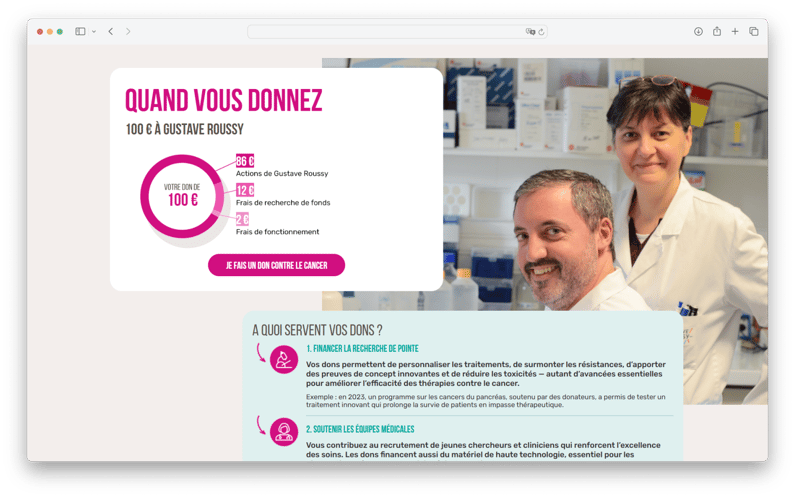
Example: Gustave Roussy reinforces trust by integrating a clear “How your funds are used” impact chart into their online donation journey. This simple transparency element significantly improves donor confidence and conversion.
2. Proximity & personal engagement shape online giving
People increasingly prefer giving to causes that feel close: local, personal, or peer-inspired. Trends for the year ahead shows a rise in:
-
in-memoriam fundraising
-
community fundraising campaigns
-
micro-projects tied to specific needs
Your fundraising strategy must now include emotional proximity, not just mission statements. Consider peer to peer charity campaigns that engage your online audience as well as your local community.
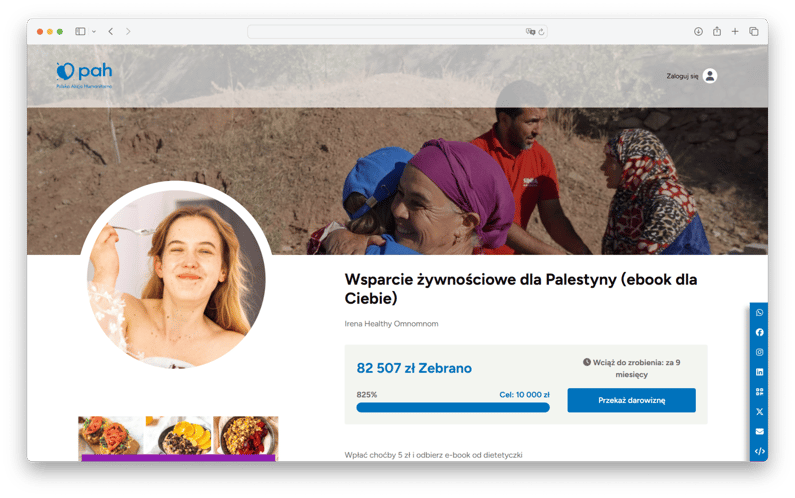
Example: The “Food Support for Palestine” campaign, launched by an influencer for the Polish Humanitarian Action, gave her online community the opportunity to make a €1 micro-donation in exchange for an eBook, combining emotional proximity with accessible giving.
This approach generated both reach and high engagement, while helping the organisation collect donations from a broader audience.
3. Younger donors (Gen Z & Millennials) are changing the rules of charity fundraising
Younger audiences give differently:
-
They donate smaller amounts but more frequently.
-
They expect seamless online charity fundraising experiences.
-
They want transparency and identity alignment.
Gen Z especially responds to value alignment (“this cause reflects who I am”) and instant connection (“I see the impact now”). To learn more about how to engage new generations, check out this article: How to engage younger donors in your fundraising campaigns.
4. Donation forms become trust builders, not just payment pages
In 2026, the donation form is no longer the end of the journey, it’s a trust checkpoint.
To convert better, forms must:
-
include trust labels or certifications
-
show transparency with dedicated content (“How your donation will be used”)
-
offer suggested donation amounts and equivalences tied to impact
-
personalise the donation experience (e.g., pre-selected recurring gift options, tailored amounts, etc.)
5. Personalised donor journeys are now the new norm
Nonprofits are moving away from “one message fits all” fundraising. 2026 winners will implement:
-
behaviour-based segmentation
-
personalised email nurturing
-
dynamic donation forms
-
interest-based content flows
6. Peer-to-peer & ambassador fundraising surge in popularity
With trust shifting from institutions to people (“I donate to someone I know”), peer-to-peer fundraising is becoming one of the most powerful acquisition channels.
In 2026, we will see continued growth in initiatives that activate friends and family networks:
-
birthday fundraisers
-
in-memoriam P2P
-
challenge-based event fundraising
-
volunteer ambassador programmes
Example: Aktiv mot kreft’s influencer-led fundraisers generated exceptional reach and engagement, proving how powerful ambassador fundraising has become for acquiring younger audiences and building community-led trust.
7. Social proof & community signals drive conversion
Donors expect the same digital cues they see in e-commerce:
-
recent activity feeds (“Marie donated 10 minutes ago”)
-
visible campaign progress
-
shared stories from beneficiaries
These elements (last donors banner, short impact stories, progress bars…) can now be integrated directly into donation forms, turning them into powerful trust-building tools that boost conversion.
8. Micro-giving & subscription models grow
With inflation still affecting household budgets, donors increasingly prefer smaller, manageable contributions. This includes:
-
Micro-donations (€1 - €5)
-
Monthly subscription giving, where supporters commit to a regular, recurring contribution
-
Round-up donations (small amounts rounded from purchases or payments)
Subscription models turn donors into “subscribers” to your cause, providing predictable revenue and helping nonprofits meet their fundraising goals more reliably.
This type of model also helps foster long-term relationships with donors, increasing engagement and boosting their lifetime value. Want to increase donor retention even further? Dive into our article: Online fundraising: from first gift to lifelong support.
9. Data-driven fundraising becomes essential
In the year ahead, leveraging data will be key to informed fundraising decisions. Nonprofits should consider:
-
tracking donor KPIs (retention, lifetime value, churn)
-
identifying high-potential segments
-
analysing campaign ROI
-
understanding donor behaviour across channels
To go further, explore our article: Key indicators to measure your not-for-profit’s fundraising performance, which breaks down the metrics that matter most when evaluating your online and offline fundraising efforts.
10. Hybrid & digital fundraising events keep rising
Supporters increasingly seek experiences they can join both in person and online. This year, expect to see more:
-
hybrid charity fundraising events, combining on-site participation with streaming for remote audiences
-
virtual challenges
-
P2P-driven sports events
-
live-giving moments with instant donation forms, collecting online donations in real time during events
One standout example of powerful streamed giving moments is Stream for Humanity, a major charity livestream event on Twitch, raising over €5 million across both editions.
During the events, French creators and thousands of viewers came together to support Doctors Without Borders France and Secours populaire français in their fight against hunger and malnutrition.
These formats are becoming some of the most effective acquisition channels, especially for younger, highly connected audiences who want to participate, share, and fundraise together.
Looking ahead
As nonprofits plan for 2026, focusing on three key pillars can help guide your efforts:
|
Trust |
Relationships |
Community |
|
Transparent communication and clear, impact-driven donation pages. |
Personalised journeys, strong donor care, ambassador programmes. |
P2P fundraising, micro-events, hybrid activations. |
By keeping these elements in mind, organisations can better respond to evolving donor expectations and nurture lasting engagement.
Need some inspiration for your next fundraising activities?
Take a look at our Fundraising calendar, a month-by-month guide to campaign planning throughout the first semester of the year.
You’ll find practical fundraising tips and seasonal ideas for your next fundraising events. Designed for charities of all sizes, this calendar helps you stay organised, inspired, and on track.